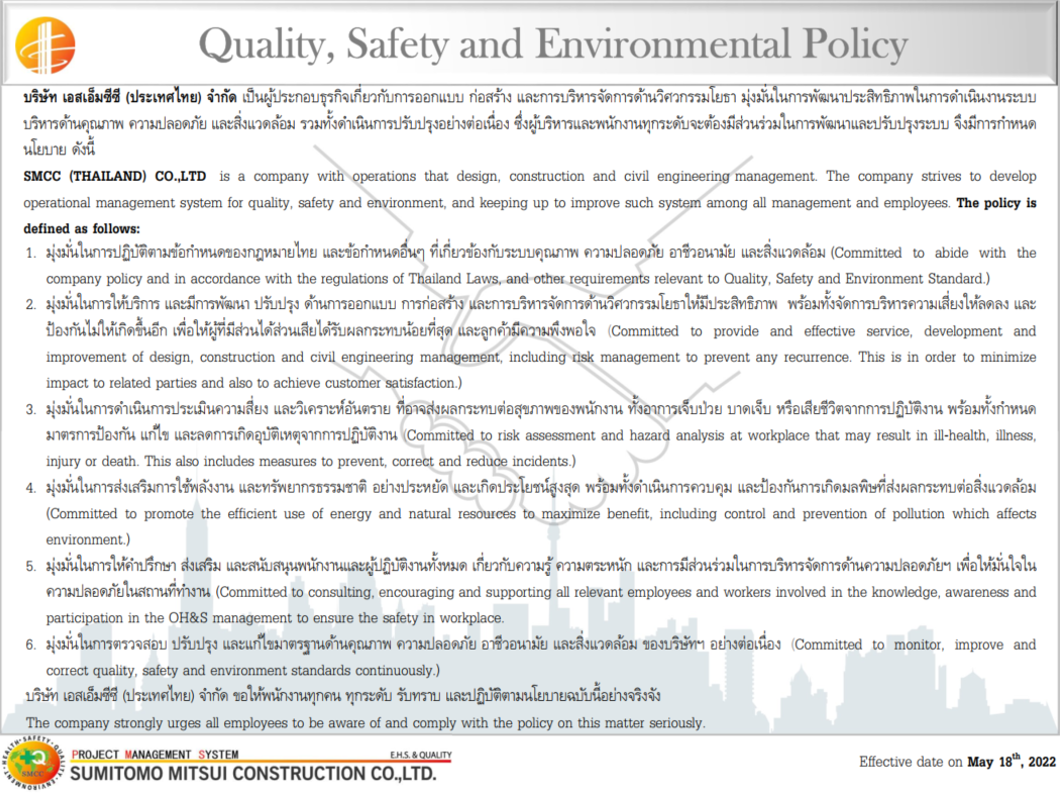
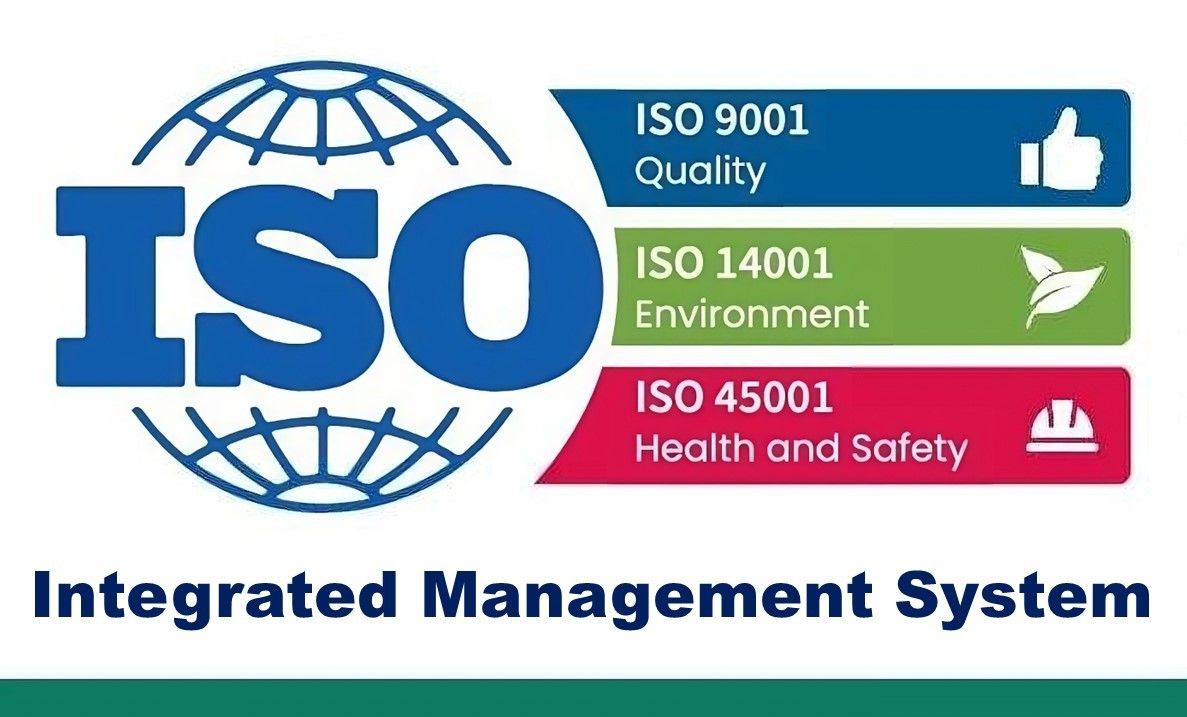
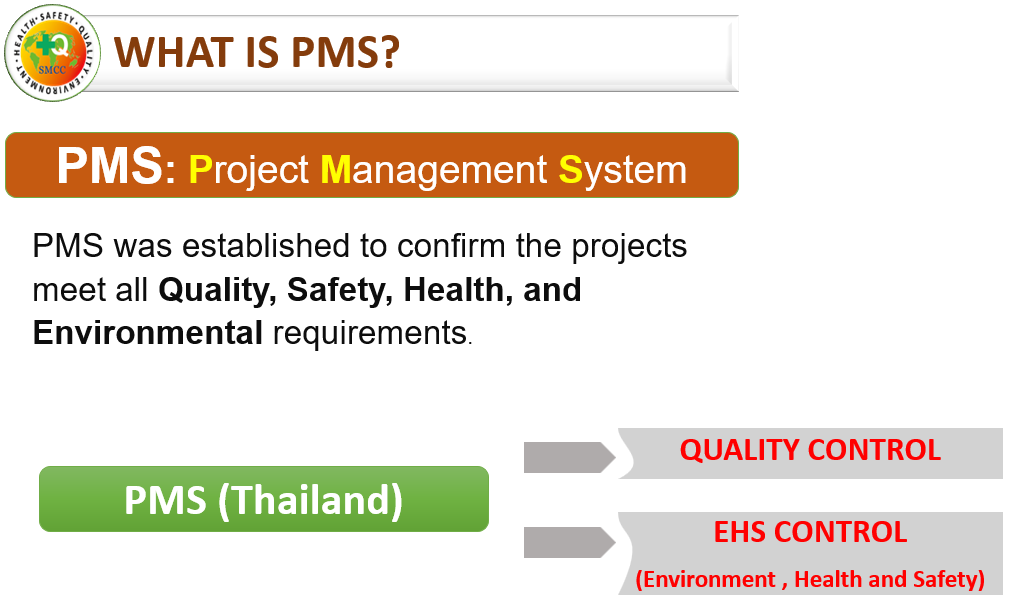
SMCC (THAILAND) CO.,LTD is a company with operations that design, construction and civil engineering management. The company strives to develop operational management system for quality, safety and environment, and keeping up to improve such system among all management and employees.
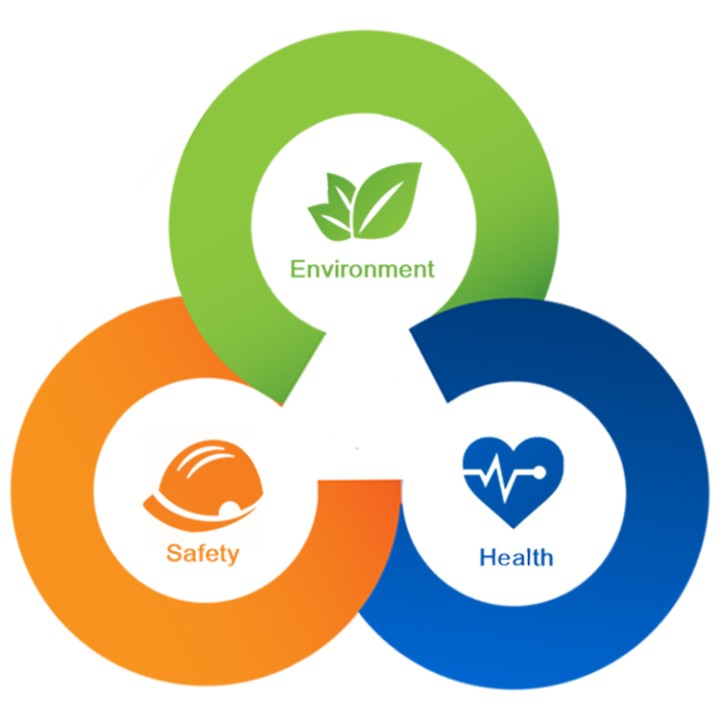
Environmental Health & Safety (EHS) in Construction Work
Introduction
Safety is the most important aspect of construction work to prevent accidents and loss of life. This report outlines essential safety measures that should be implemented in every construction site.
Safety Guidelines
Safety is the most important aspect of construction work to prevent accidents and loss of life.
All workers must wear personal protective equipment such as safety helmets, gloves, and safety boots.
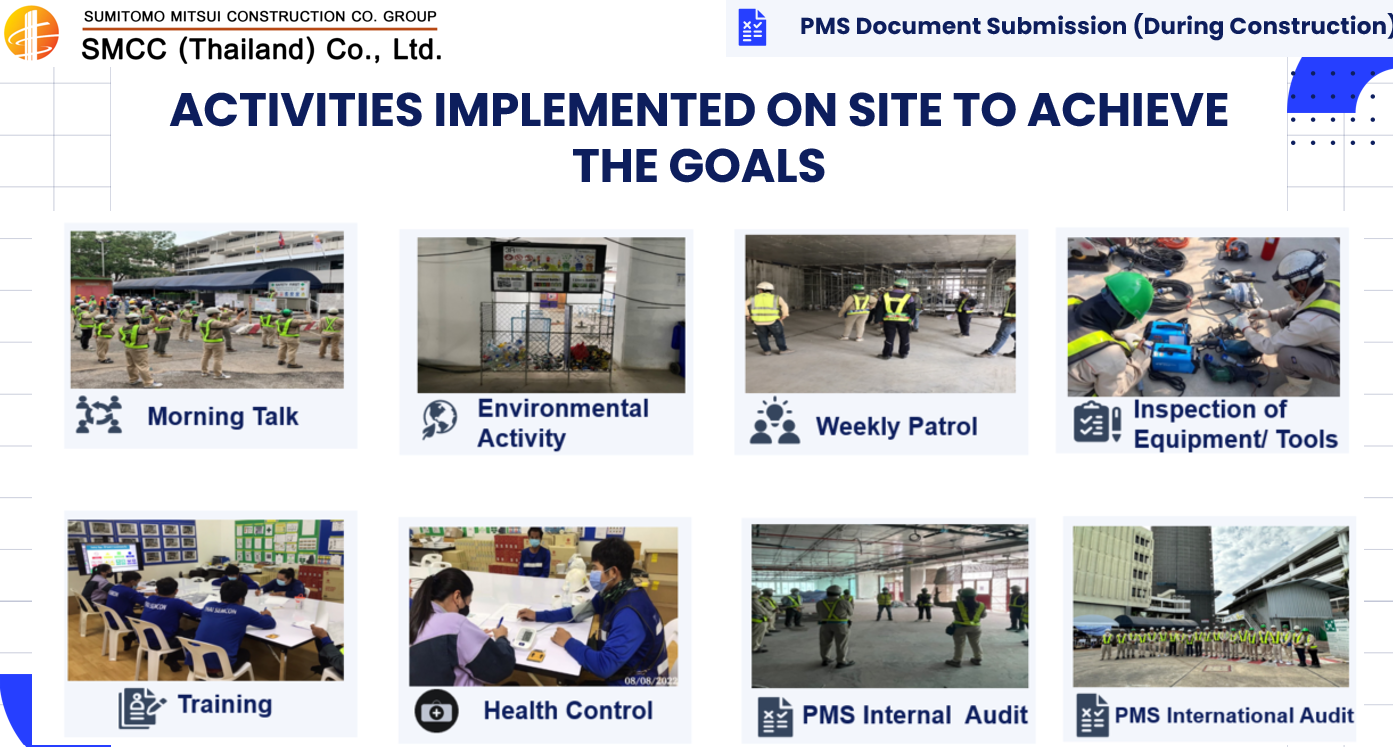
Tools and equipment should be inspected and ensured to be in good condition before starting work.
The work area should be organized to reduce risks of tripping or falling objects.
Follow safety regulations and standards set by relevant authorities.
Regular safety training must be provided to all employees.
Warning signs and barriers should be installed in high-risk areas.
Monitor environmental conditions, such as weather, to prevent hazards from strong winds or rain.
Emergency plans and rescue equipment should be available in case of accidents.
Team cooperation is the key to creating a safe working environment.
Conclusion
Implementing these safety measures can significantly reduce risks and create a safer environment for all workers. Safety is a shared responsibility that requires commitment and cooperation from everyone involved.
With "Contribution to the global environment" as one of the Corporate Principles, Sumitomo Mitsui Construction seeks to always be friendly to people and the Earth in its operations as a construction company and values harmony between the living environment and nature. Furthermore, recognizing demands for contribution to the environment on a global scale, we are proactively working to conserve, maintain, and improve the environment.
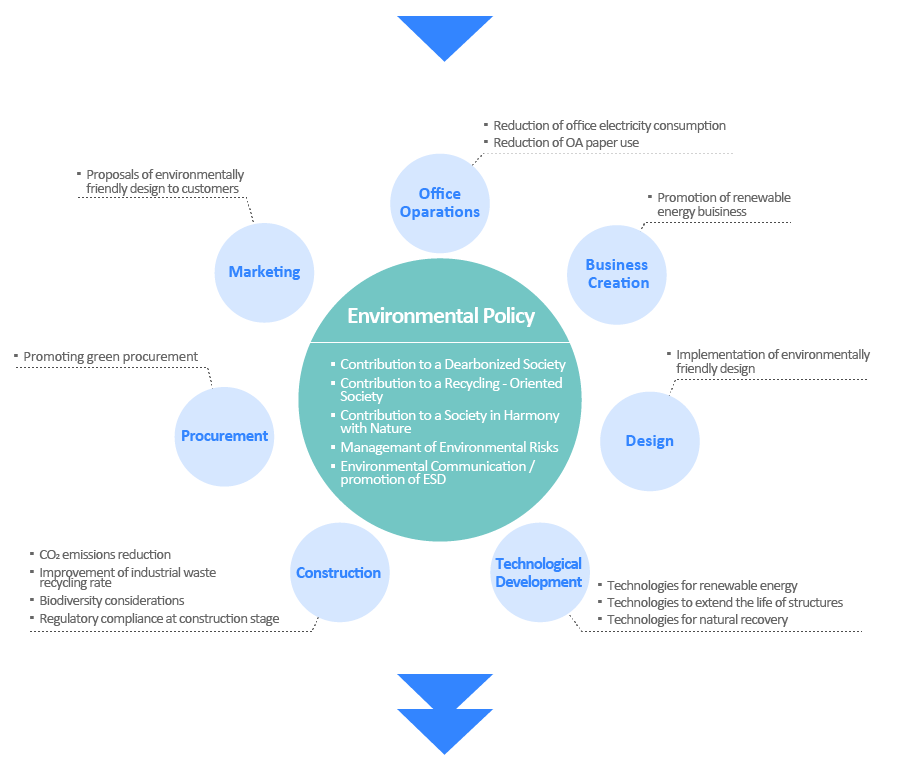
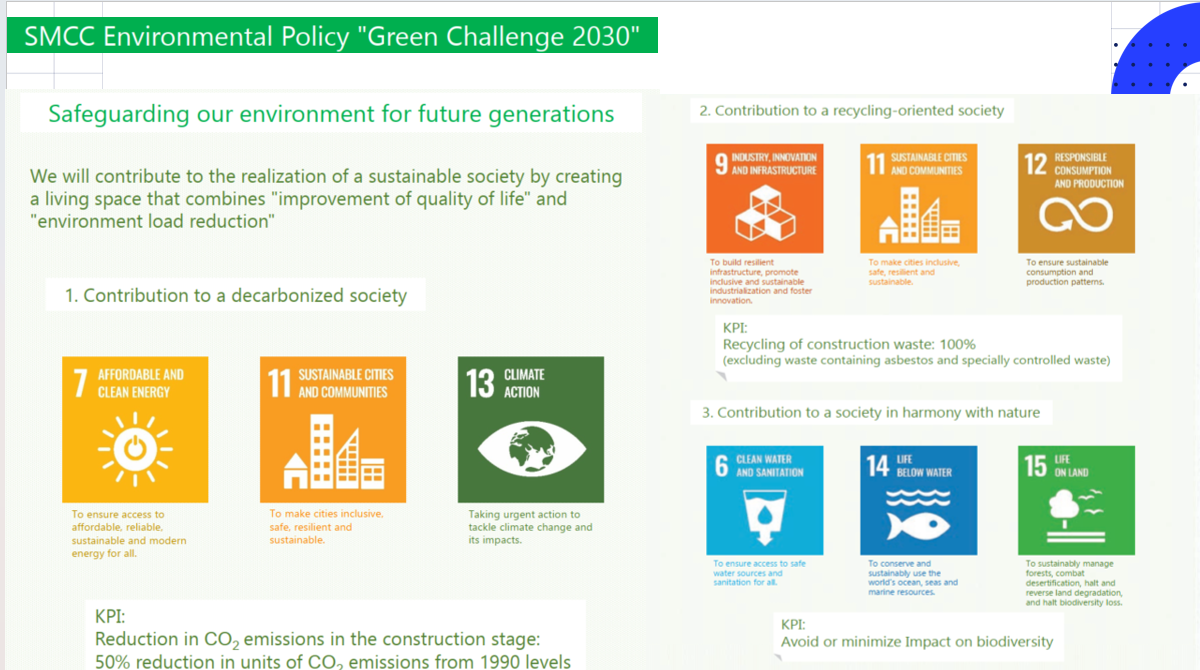
Environmental Policy"Green Challenge 2030"
Since 2011, we have continued our environmental management activities under our environmental vision "Green Challenge 2020." Ahead of the arrival of 2020, which was the target year for the environmental vision, we reviewed the results of our environmental management activities to date, as well as social trends and issues since the establishment of the environmental vision in 2011. In April 2019, we developmentally revised our environmental vision and established a new environmental policy, "Green Challenge 2030". Looking ahead to what we should be in 2030, we contribute to the realization of a sustainable society.
"We Protect the Environment for Future Generations"
We, as a general construction company that connects people and communities, contribute to the realization of a sustainable society by improving the quality of life and reducing environmental impact.
1.Contribution to a decarbonized society
2.Contribution to a recycling-oriented society
3.Contribution to a society in harmony with nature
4.Management of environmental risks
5.Environmental communication/Promotion of ESD※
※ESD:Education for Sustainable Development
KPI of "Green Challenge 2030"
Reduction of Scope 1+2 CO2 emissions: 42% reduction compared to 2023
Promotion of renewable energy businesses: Facility capacity of 150 MW or higher The generation of capacity of power generation project facilities, including solar, micro-hydro-electric, and wind power
Reduction of Scope 3 CO2 emissions: 25% reduction compared to 2023
Recycling of construction waste: 100% (total waste from new construction in 2050)
Avoid or minimize impact on biodiversity
Avoid or minimize environmental incidents
System for Promoting Environmental Policy
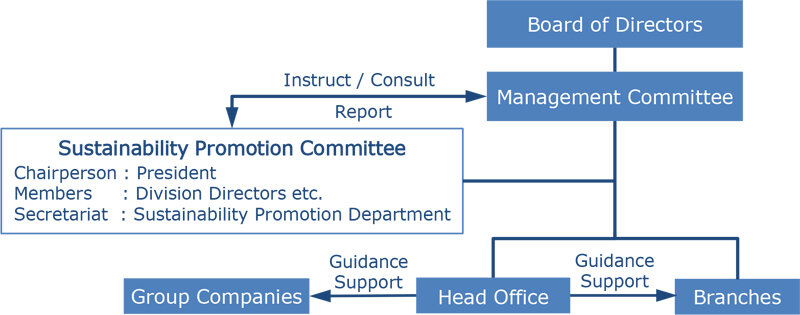
We have established the Sustainability Promotion Committee, which is chaired by the President himself, to deliberate and examine various important sustainability issues, mainly related to the environment. Particularly important matters are made decisions in the Management Committee. In order to develop activities with the participation of all employees, the Sustainability Promotion Department has been established and takes the initiative.
Roadmap to Carbon Neutrality in 2050
We formulated the "Roadmap for Achieving Carbon Neutrality by 2050" in November 2021 and revised it in May 2025. The revised roadmap sets a new long-term goal of achieving carbon neutrality for Scope 1 + 2 + 3 CO2 emissions by 2050. We also updated the milestone targets for Scope 1 + 2 and Scope 3 CO2 emissions by 2030 and set 2023 as the base year.Following the roadmap revision, we have updated the KPIs related to "Contribution to a Decarbonized Society" in our environmental policy "Green Challenge 2030," and will implement target management through our environmental management system.
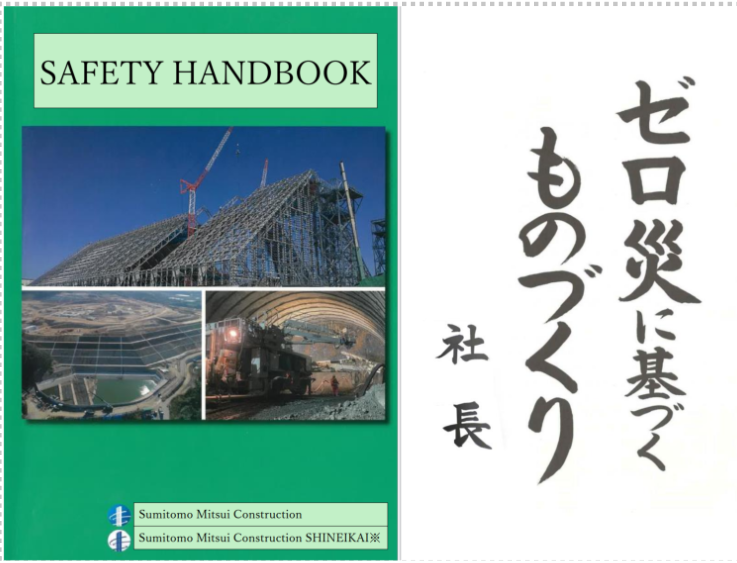
Strict implementation of "Thorough 5S" as a core discipline of *MONOZUKURI,
"Supreme Quality Assurance" to be passed on to the next generation!
< PRODUCTION MANAGEMENT BASIC POLICY>
PRIORITY ACTIONS PRIORITY ACTIONS
Through the combined strengths of our people and technology, we promote Supreme Quality Assurance
by placing emphasis on the construction process, while preserving and passing down
our culture of safety and quality.
“Supreme Quality Assurance” means that all SMCC Executives and Employees shall engage in Quality Control Activities
with good faith, pride, high aspirations, and sincerity to jobsites.
Specifically,
1. Quality control activities that all SMCC staff (HQ, branch management, project managers and site staff) shall implement with the understanding of the priority that Safety, Quality first, Cost second.
2. Quality control activities that continue to do the right things in the right manner. Those activities must not be "provisional" or "temporary".
3. Quality control activities that do the right things "thoroughly", "seriously" and "without any compromises".
4. Quality control activities that SMCC staff themselves unfailingly check the
5.process and the results of their instructions every day, and not "just leaving the work to sub-contractor" or "only instructing and not checking ".
《PRODUCTION MANAGEMENT BASIC PLAN》
1. PREVENTION OF QUALITY PROBLEMS
(1) Defect factor analysis of the past projects ((Preventive measures for human error, material, method)
(2) Information sharing of useful examples and findings in QSA/Safety & Quality Audits
(3) Verification of priority quality control items in the construction process

.png)
.png)